Project buyers do not need every new basin shape. They need design directions that remain attractive after hundreds of rooms, fit the planned furniture and can be documented clearly enough for repeat supply. The most useful trends are therefore less about novelty and more about how familiar ceramic products are refined.
Softer geometry is replacing harsh edges
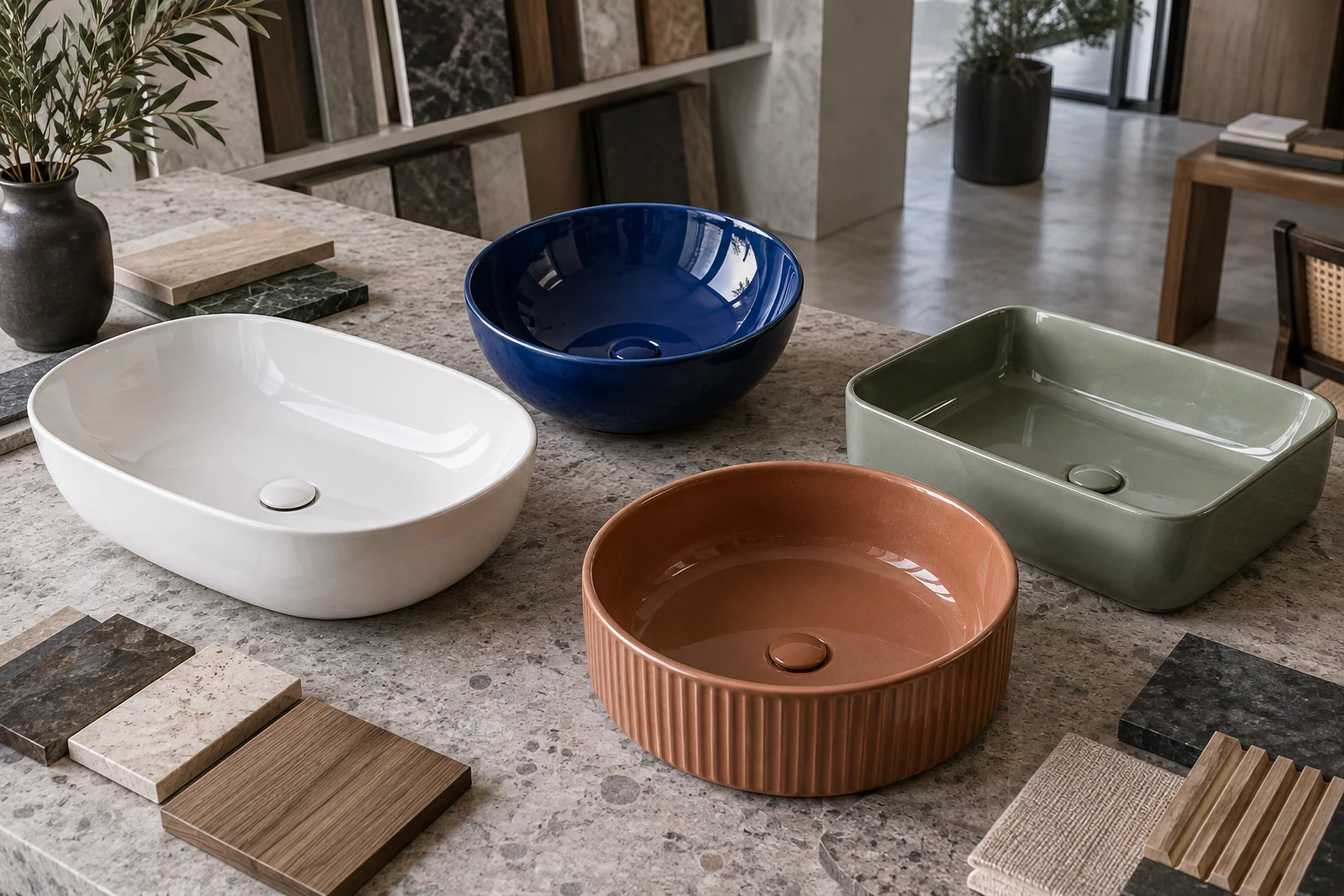
Rectangular basins remain important, but many current interiors use generous corner radii and slightly softened walls. The result coordinates with curved mirrors, rounded furniture and calmer hospitality spaces without abandoning the efficiency of a rectangle.
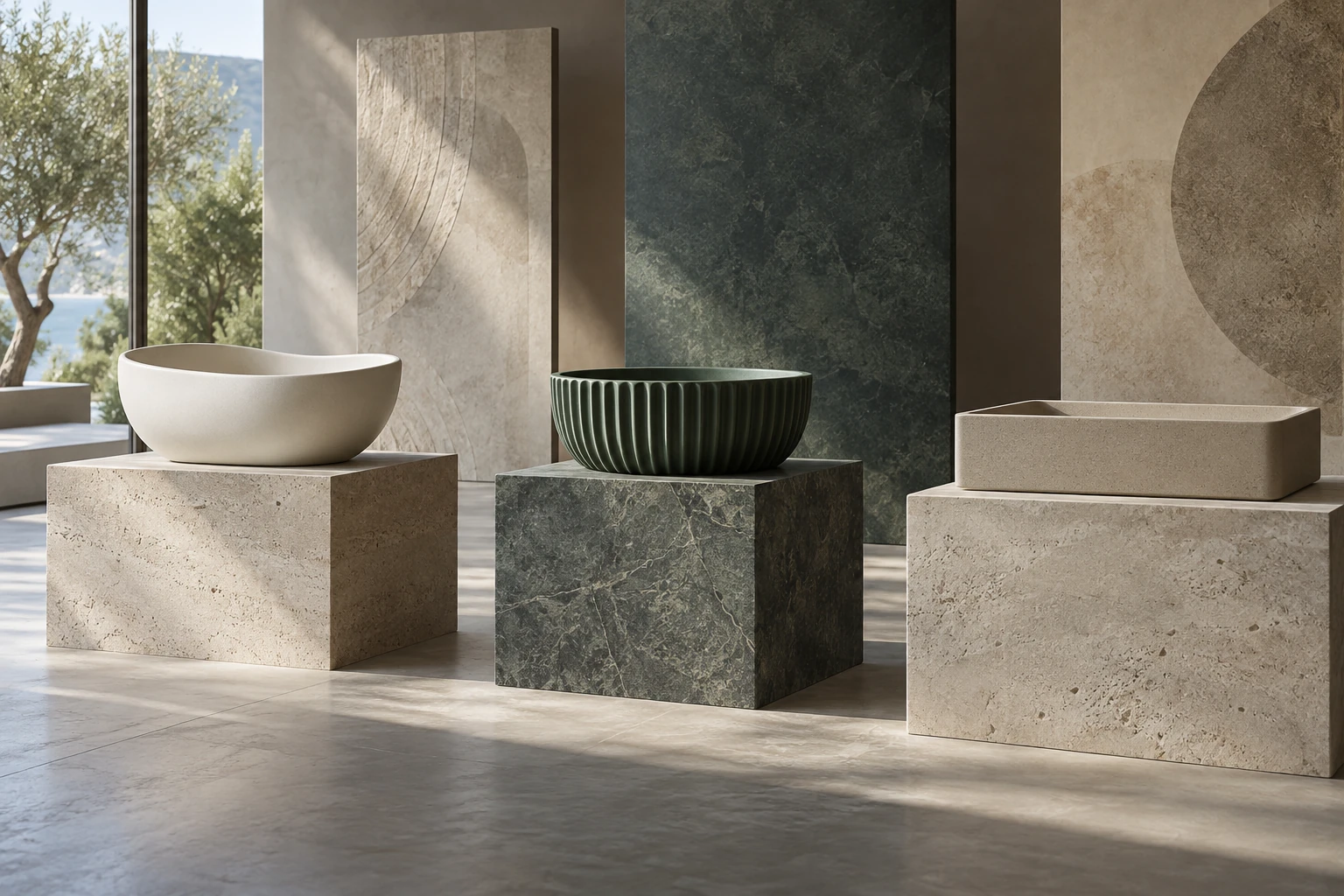
Organic ovals and asymmetrical forms can add character in suites or feature rooms. Use them where the countertop and tap arrangement have been checked carefully. A distinctive outline should not create an awkward cut-out or uncertain replacement strategy.
Lower profiles create a quieter vanity line
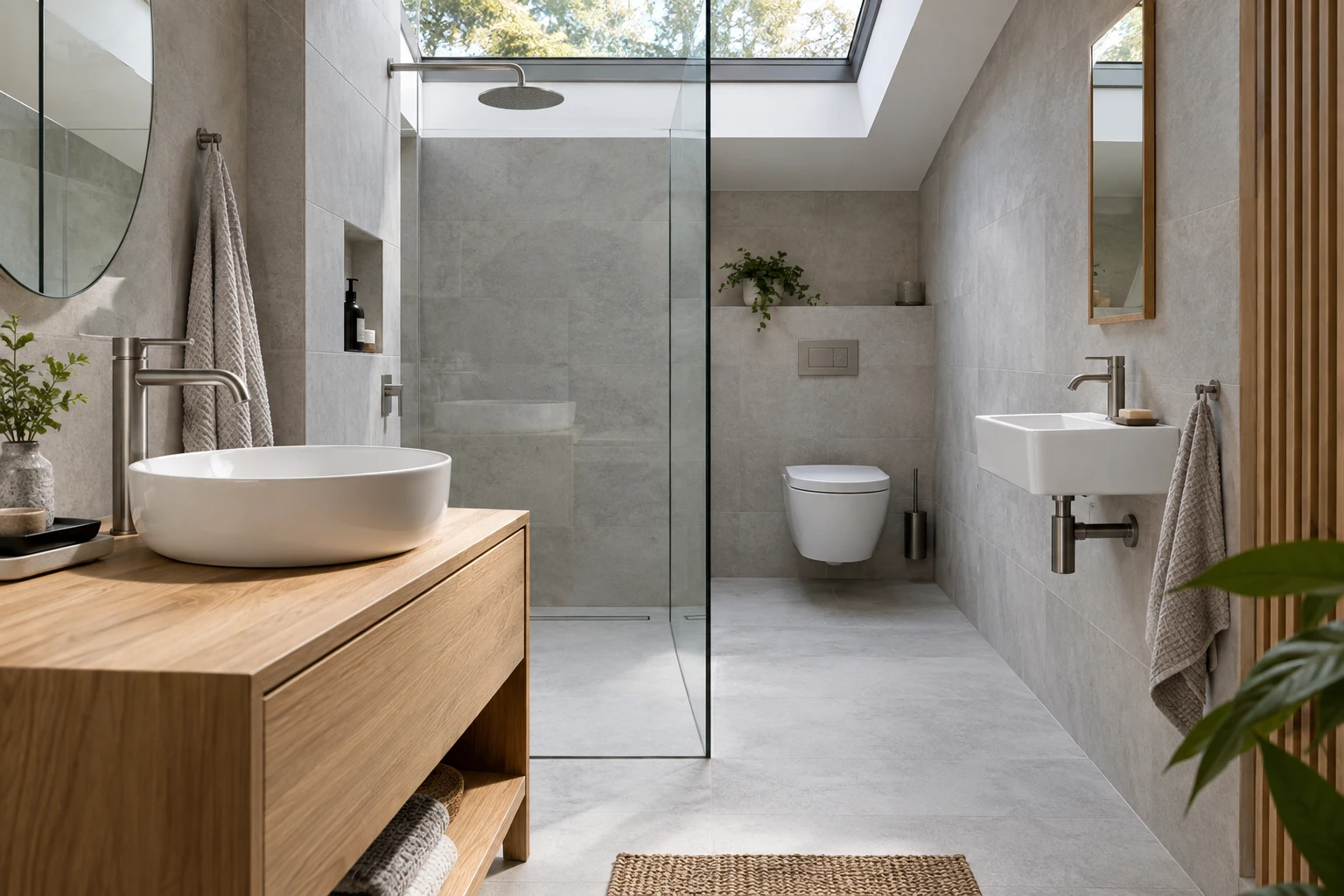
Low, broad countertop basins can reduce visual bulk on wide vanities and allow mirrors to sit comfortably above the finished rim. They suit interiors where the countertop material and furniture are intended to remain visible.
Low profile does not automatically mean shallow performance. Buyers should review internal bowl geometry, waste position and tap reach on the actual model. A styled elevation cannot answer those functional questions.
Color is becoming more restrained and architectural
Deep green, muted blue, warm mineral tones and soft neutrals are being used as alternatives to white. Projects often achieve a more durable result by selecting one controlled accent finish rather than mixing many colors across room types.
White still has a strong role where broad coordination, phased purchasing and easy replacement matter. Our white versus colored ceramic sink guide explains how to balance those roles and approve the finish.
Exterior texture adds interest without changing the bowl
Fluted or gently ribbed exteriors can create shadow and tactile detail while keeping the functional inner bowl familiar. This approach is attractive for countertop models because the exterior remains visible after installation.
Texture changes cleaning and packing considerations. Deep details can collect dust in a showroom, and decorated surfaces need protection from rubbing. Review a sample at normal viewing distance rather than judging only a close-up photograph.
Compact products are becoming more considered
Smaller bathrooms do not have to rely on generic miniature fixtures. Compact wall hung basins, reduced-depth countertop models and carefully proportioned faucet decks can support apartment, hotel and secondary-bathroom layouts. Compare their planning requirements in the countertop and wall hung sink guide.
Projection, usable bowl space and tap position matter more than the headline width. A small product that splashes or blocks circulation is not a successful compact solution.
Maintenance is part of the design trend
Project teams are paying more attention to how a basin is cleaned, repaired around and replaced. A sculptural exterior may be appropriate in a feature suite, while a simpler profile can be more practical across standard guestrooms. Matte and textured finishes should be reviewed for fingerprints, water marks and housekeeping routines before they are repeated widely.
Ask the operator or facilities team to review shortlisted samples. Their feedback can identify access and cleaning issues that are easy to miss in a design presentation.
Projects favor families, not isolated statement pieces
A basin direction becomes easier to manage when related models cover more than one room type. The family may share corner language, finish and rim character while changing size or installation. This gives designers continuity and gives purchasing teams clearer references.
Where a matching family is not available, use a simple project rule—for example, soft rectangles in main bathrooms and compact round wall hung models in secondary spaces—then record each approved model in the room schedule.
How to specify a trend without creating risk
Shortlist the design direction, then confirm dimensions, installation, tap and waste coordination, finish reference, packing and quantities. For repeated layouts, use the vanity basin dimension guide before countertop work begins.
Trend-led design is most successful when the striking element is controlled. A soft shape, one intentional color or a textured exterior can give the bathroom identity while the rest of the specification stays practical. That balance keeps a project current without making it fragile.